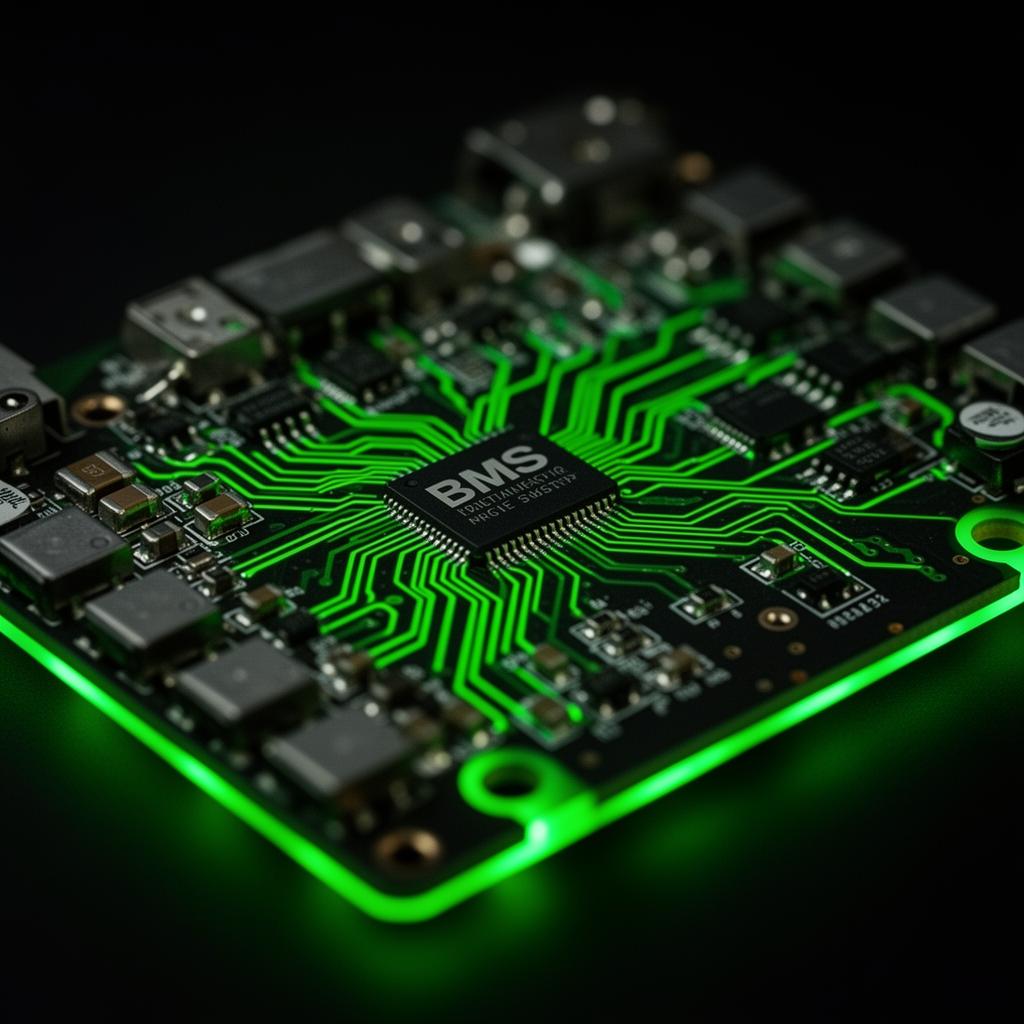
BMS protection and communication for industrial batteries
In industrial applications, LiFePO4 delivers its full value together with the integrated BMS: protection, diagnostics and communication.
BMS protection functions
Every LFP-E battery includes an integrated BMS that provides the following protection and monitoring functions.
Overcharge protection
Over-discharge protection
Overcurrent protection
Short-circuit protection
Temperature monitoring
Cell voltage monitoring
Cell balancing
Diagnostic data
Communication options
Planned and available communication protocols for BMS data readout and fleet supervision.
Bluetooth
Status and BMS diagnostics accessible from a mobile application.
RS485
Industrial-standard communication for fleet management and supervisory systems.
CANBus
Automotive and OEM-standard integration for machine builders.
UART
Low-level serial communication for embedded integrations.
LiFePO4 vs lead-acid comparison
| Property | LiFePO4 | Lead-acid |
|---|---|---|
| Cycle life | 2,000–5,000+ | 300–500 |
| Charging time | 1–3 hours | 6–10 hours |
| Weight | ~50% lighter | Baseline |
| Maintenance | None required | Regular |
| Deep-discharge protection | Provided by BMS | None |
| Temperature sensitivity | Wider range | Sensitive |
| Environmental impact | Lower | Higher (lead, acid) |
Cycle life
LiFePO4
2,000–5,000+
Lead-acid
300–500
Charging time
LiFePO4
1–3 hours
Lead-acid
6–10 hours
Weight
LiFePO4
~50% lighter
Lead-acid
Baseline
Maintenance
LiFePO4
None required
Lead-acid
Regular
Deep-discharge protection
LiFePO4
Provided by BMS
Lead-acid
None
Temperature sensitivity
LiFePO4
Wider range
Lead-acid
Sensitive
Environmental impact
LiFePO4
Lower
Lead-acid
Higher (lead, acid)